26dems Homepage
Tech Advisory: This web page is best viewed in Firefox, Safari, or Internet Explorer version 7 and newer. You may have to upgrade Adobe Flashplayer if you experience problems. Report any problem to the webmaster.

Sunday, April 11, 2010

Maddow: GOP Faking Outrage

MSNBC Video: Let Them Eat Fake

Friday, April 9, 2010

KUAT-TV sponsoring debate/panel discussion on Proposition 100: The 1% Temporary Sales Tax

Arizona Education Network News

Proposition 100 Debate/Panel Discussion

April 11, 2010 at 6:30 pm

KUAT-TV is sponsoring a debate/panel discussion on Proposition 100 called "Arizona's Sales Tax: Fix or Folly" at 6:30 p.m. this Sunday, April 11, at the Stevie Eller Dance Theater, 1713 E. University Blvd. (On the UA Mall, just west of Campbell.)

Representing the pro-temporary sales tax view is Ann-Eve Pedersen from the Arizona Education Network, with the opposing view represented by Farrell Quinlan, the Arizona State Director of the National Federation of Independent Businesses. Stan Reynolds, Vice Dean of the Eller College of Management, will also participate as a neutral economist.

Confirmed media panelists for the forum include Jim Nintzel from the Tucson Weekly, Linda Valdez of the Arizona Republic and Tom McNamara from KVOA-TV Channel 4. Bill Buckmaster from Arizona Illustrated will moderate the forum.

Attend, Send a Question or Watch On-line

We need education supporters to attend this event! Doors open at 5:30 p.m. Seating is limited and on a first come basis. For directions, click here.

The public can ask questions during the event as well as submit them in advance by emailing
questions@AZpublicmedia.org and online at the Arizona Public Media Facebook page.

The forum will be broadcast live on PBS World Channel 27.3 (Cox 83 and Comcast 203). It will also stream live on the web .


Voters can request early ballots now and begin voting by mail as early as April 22 for the MAY 18th SPECIAL ELECTION for PROPOSITION 100 by linking here:

Action Alert: Don't Let the AZ Leg Sell Democracy to the Highest Bidder|Save Citizens Clean Elections Act


Twelve years ago, Arizona voters created the Citizens Clean Elections Act to kick big money out of politics. At the time, the state was still reeling from the AZScam scandal, when politicians traded money for votes with developers, corporations and mobsters.1

But the Clean Elections Act has changed Arizona politics one $5 bill at a time. Under the law, candidates who demonstrate community support by collecting a bunch of $5 qualifying contributions can use a shared pool of money to run a competitive election.2 That cuts big donors and corporations out of the process and keeps the focus where it belongs - on working Arizonans and their interests.

But with budgets tight because of the recession, those big donors and their buddies in the Legislature want to repeal the Clean Elections Act, use the money for something else and get back to the bad old days when decisions were made by the highest bidder.3

A bill to kill clean elections has already been introduced in the Legislature and a vote could come soon.4 But you can stop it. Click here to send your elected leaders a message supporting Clean Elections:

Candidates who run using the Clean Elections system really ARE different: After a majority of the Arizona Corporation Commission ran and won using the Clean Elections Act, they passed a law requiring that 15 percent of all power produced in Arizona come from renewable energy sources by 2025.5 And new candidates are signing up to use the system every day.6

Opponents of Clean Elections say the program is too expensive. But not a single dollar of Clean Elections money comes from Arizona's cash-strapped General Fund -- in fact, the Clean Elections Fund has donated $20 million to the General Fund in the last two years alone.7

But this fight isn't really about budgets. This is about power: If the people fund elections, then we still have the power to decide who's in charge and what kind of laws they make. But if elections are for sale to the highest bidder, then people like us get cut out in favor of corporations, rich folk and out-of-state donors.

That's not the democracy we want or deserve. Act now to save the Citizens Clean Elections Act.

-Drew

Drew Hudson
TrueMajority / USAction

1 - time.com/time/magazine/article/0,9171,972359,00.html
2 - azcleanelections.gov/home.aspx
3 - kpho.com/news/22920525/detail.html
4 - azcapitoltimes.com/blog/2010/04/01/facing-defeat-measures-to-gut-clean-elections-system-held-in-committee/
5 - azcc.gov/divisions/utilities/electric.asp
6 - tucsonweekly.com/TheRange/archives/2010/03/29/first-in-the-crowded-house-democrat-bob-gilby-files-in-ld27
7 - azadvocacy.org/issues/cleanelections.html

Tuesday, April 6, 2010

Network Neutrality Supporters Back FCC After Court of Appeals Decision

Sen. Kerry looks for ways to make commission's authority over Internet clear

By John Eggerton --
Broadcasting & Cable,
4/6/2010 1:46:38 PM


The FCC is getting support from network neutrality fans on Capitol Hill and elsewhere in Washington after Tuesday's (Apr. 6) D.C. Court of Appeals ruling that calls some of the commission's authority into question.

The FCC will likely need clear authority if it is to help implement the national broadband plan, and certainly in its effort to codify and expand the network neutrality guidelines it used to find Comcast wanting in its network management of BitTorrent.

"Clearly, the court's decision must not be the final word on this vitally important matter, and I intend to work vigorously to ensure an open Internet for generations to come," said Rep. Ed Markey (D-Mass.), who has proposed network neutrality legislation,

Markey said what the court had done was "[throw] out the previous commission's shoddy legal theories." Though the court also threw out the justifications provided for those theories by the current commission's attorneys. "In light of the court's ruling," he said, "I encourage the current commission to take any actions necessary to ensure that consumers and competition are protected on the Internet. It is important to note that the Court neither called into question the wisdom of network neutrality policies nor did it exonerate Comcast for its unreasonable interference with lawful consumer Internet use."

The court confined its decision to the issue of jurisdiction over network management practices; a jurisdiction it said the FCC failed to justify under broad ancillary authority.
Continue reading here.

Court Decision Endangers FCC's Ability to Protect Net Neutrality and Implement National Broadband Plan

FCC Can and Must Act Quickly to Close the Bush Era Loophole

FOR IMMEDIATE RELEASE

Date: April 6, 2010
Contact: Liz Rose, Free Press, 202-265-1490 x 32 or 202 355 3559 (c)

WASHINGTON -- S. Derek Turner, research director for Free Press, made the following statement in response to the DC Circuit's opinion in Comcast v. FCC:

"The decision has forced the FCC into an existential crisis, leaving the agency unable to protect consumers in the broadband marketplace, and unable to implement the National Broadband Plan. As a result of this decision, the FCC has virtually no power to stop Comcast from blocking Web sites. The FCC has virtually no power to make policies to bring broadband to rural America, to promote competition, to protect consumer privacy or truth in billing. This cannot be an acceptable outcome for the American public and requires immediate FCC action to re-establish legal authority."
"This crisis is not a result of a weak congressional law, but a direct consequence of the previous two Commissions' misguided and overzealous attempts to completely deregulate America's communications networks. Past FCC actions created a huge loophole in the law that leaves the agency unable to protect consumer privacy or promote universal broadband access."
"The FCC must have the authority to carry out its consumer protection and public interest mission in the 21st-century broadband marketplace. The current Commission did not create this existential crisis, but it now has no choice but to face these tough jurisdictional questions head on, and do what is necessary to protect consumers and promote competition."

Court Says F.C.C. Cannot Require ‘Net Neutrality’

By EDWARD WYATT
New York Times
Published: April 6, 2010

WASHINGTON — A federal appeals court on Tuesday dealt a sharp blow to the efforts of the Federal Communications Commission to set the rules of the road for the Internet, ruling that the agency lacks the authority to require broadband providers to give equal treatment to all Internet traffic flowing over their networks.
The decision, by the United States Court of Appeals for the District of Columbia Circuit, specifically concerned the efforts of Comcast, the nation’s largest cable provider, to slow down customers’ access to a service called BitTorrent, which is used to exchange large video files, most often pirated copies of movies.

After Comcast’s blocking was exposed, the F.C.C. told Comcast to stop discriminating against BitTorrent traffic and in 2008 issued broader rules for the industry regarding “net neutrality,” the principle that all Internet content should be treated equally by network providers. Comcast challenged the F.C.C.’s authority to issue such rules and argued that its throttling of BitTorrent was necessary to ensure that a few customers did not unfairly hog the capacity of the network, slowing down Internet access for all of its customers.

But Tuesday’s court ruling has far larger implications than just the Comcast case.

The ruling would allow Comcast and other Internet service providers to restrict consumers’ ability to access certain kinds of Internet content, such as video sites like Hulu.com or Google’s YouTube service, or charge certain heavy users of their networks more money for access.

Continue reading here.

Monday, April 5, 2010

Act Now to Debunk the Junk: Massive Lobbying Threatens to Kill Open Internet


Stand Up for the Open Internet


Comcast, AT&T and Verizon have deployed hundreds of lobbyists in a final push to kill the open Internet.

Their goal: Take control of Internet content away from Internet users. Their tactic: Tell outrageous lies about Net Neutrality — the only thing stopping them from interfering with your online experience.

You now have four days left to convince the FCC that these companies are wrong:

Demand Net Neutrality.


Free Press and our allies in the SavetheInternet.com Coalition are gathering hundreds of thousands of signatures to show the FCC that Internet users -- and not corporations -- should control the Internet.

In the last year alone, phone and cable companies have spent more than $90 million to hire nearly 500 D.C. lobbyists in a last-minute push for power over what we do, where we go and with whom we connect online.

Their lobbyists are now flooding the FCC with lies that portray Net Neutrality as a threat to the free-flowing Internet.

Nothing could be further from the truth. We need to speak out now to keep the Internet open. The FCC must craft new Net Neutrality rules that protect our Internet freedom. Our best chance to be heard by the agency ends Thursday, April 8, when the agency’s docket for public comments closes.

Tell the FCC: Net Neutrality Protects the Open Internet

Set the record straight: Tell the FCC that Net Neutrality is essential to keeping the future of communications open and available to all Americans.

It’s critical that the FCC hears from you before the April 8 And here is the rest of it.

McClatchy: Is American History Being Changed?

Not satisfied with U.S. history, some conservatives are rewriting it

Click on the picture to view Video

Bachmann: FDR "Caused" the Depression

By Steven Thomma | McClatchy Newspapers

WASHINGTON — The right is rewriting history.

The most ballyhooed effort is under way in Texas, where conservatives have pushed the state school board to rewrite guidelines, downplaying Thomas Jefferson in one high school course, playing up such conservatives as Phyllis Schlafly and the Heritage Foundation and challenging the idea that the Founding Fathers wanted to separate church and state.

The effort reaches far beyond one state, however.

In articles and speeches, on radio and TV, conservatives are working to redefine major turning points and influential figures in American history, often to slam liberals, promote Republicans and reinforce their positions in today's politics.

The Jamestown settlers? Socialists. Founding Father Alexander Hamilton? Ill-informed professors made up all that bunk about him advocating a strong central government.

Theodore Roosevelt? Another socialist. Franklin D. Roosevelt? Not only did he not end the Great Depression, he also created it.

Joe McCarthy? Liberals lied about him. He was a hero.

Read more here

Sunday, April 4, 2010

Cornered: Thom Hartmann's Buzzflash Independent Review of the Month & "Capitalism Hits the Fan"

26dems Editorial Comment:

The Republicans have failed at governance in Arizona. Failed formulas pushed by Republicans Al Melvin and Vic Williams have done harm to their constituents. Melvin and Williams are faithful followers of the Phoenix GOP. They choose to reward corporations with tax breaks at the expense of children and families. These actions have worsened the economic crisis and caused disruption and suffering in our state. The stakes in this election are high. It's time to bring new leadership to the Capital. We need change that will put our state on the right track. Democratic candidates Cheryl Cage for Senate and Rep. Nancy Young Wright have worked tirelessly for education and for innovative solutions that will enable our state to succeed.

Arianna Huffington has made a strong case that America is no longer the innovation leader. She cites statistics that show the United States as 18th out of 24th and falling in educational achievement. Arizona ranks 50th in education. No wonder we are failing as a nation to promote policies that improve the stakes for labor and business to thrive whenever obstructive Republicans won't budge from their nineteenth century mindset.


How bad does it have to get before Republicans recognize what failure is? The Republicans in the Arizona legislature are behaving in lockstep as if they are entitled to govern and have consistently locked out voices that are crying for relief and a restoration of opportunity. The Republican dogma is blind to the fact that corporate welfare is eroding the very foundations not only of democracy, but capitalism itself. Their "Hell No" game playing, abandonment of government responsibility, and refusal to deal with the crisis in the face of reality has thrust us upon the road to ruin. These two scholars take a comprehensive look at the history and causes of the economic crisis and the central role innovation must play to pull our country back from the brink.

BuzzFlash.com's Review (excerpt)
March 2010

Each month or so, BuzzFlash is privileged to have nationally syndicated progressive talk show host Thom Hartmann review a progressive book or DVD exclusively for BuzzFlash. See other progressive premiums at The BuzzFlash Progressive Marketplace. See all of Thom's reviews for BuzzFlash at "Independent Thinker"

Thom Hartmann's Review -- Exclusively for BuzzFlash -- for March 2010:


"Cornered: The New Monopoly Capitalism and the Economics of Destruction"

By Barry C. Lynn

Reviewed by Thom Hartmann

This book is about power. It documents how practices that were illegal at the opening of the Reagan administration have not only been legalized but used extensively to consolidate economic and political power in a way that threatens our very republic. It’s almost impossible to overstate its importance.

Most adults in America have, at one time or another in their lives, played the game Monopoly.

Monopoly started out as a game invented by Elizabeth Magie and patented in 1904 (she sold her patent to Parker Brothers in 1935 for $500, and they incorporated it into the modern Monopoly game, which was patented that year by Charles Darrow). The goal of the game is to buy up every business and property available, and through the monopoly ownership of all business and rents, over time bleed every other player into poverty.

Magie was a political activist who wanted to create a way to inform the average person of how concentration of ownership of property and aggregation of rents over time would lead to the concentration of wealth in a few hands with the rest of the population experiencing widespread poverty.

Today people like Mitt Romney and T. Boone Pickens play the game in the real world, impoverishing real people and destroying real businesses while taking all the cash they can for themselves.

As Barry C. Lynn (no relation to Barry Lynn of Citizens United for Separation of Church and State) writes in meticulous detail, the free enterprise of the founding era of this nation has, twice in our history, morphed into a cancerous economic state. Monopolies are not free enterprise, they’re not even good capitalism.

When one particular set of cells in a body rise up and decide to take to themselves all the nutrients in the body, growing without limit while robbing every other organ and cell of its necessary nutrients, we call that cancer. When it happens in a political and economic system, it’s called monopoly.

This is only the second time in American history when we’ve faced such a concentration of wealth and power, of business and money, and of the political control that flows from it.

Continue reading here


Capitalism Hits the Fan DVD: How Did the American Dream Turn Into the Nightmare on Wall Street?

By Richard Wolff

BuzzFlash.com's Review (excerpt)
"Capitalism Hits the Fan" is a DVD at its most basic (a lecture as if you were back in college) brimming with an electrifying explanation of how the "American Dream" evolved into the "Nightmare on Wall Street."

Our guide (lecturer) is economics Professor Richard Wolff of the University of Massachusetts. As much as we have read at BuzzFlash about the economic meltdown, Wolff shed a new comprehensive perspective on the Wall Street bubble (now bursted) at the expense of the decline of the middle class.

Wolff tautly strings together an economic theory (some of the observations with which we might differ)that offers a persuasive explanation of how Wall Street exploded by increasing our indebtedness as individuals and as a nation, at a time when wages remained stagnant.

Continue reading here.

For more information visit the Media Education Capitalism Hits the Fan Website

When It Comes to Innovation, Is America Becoming a Third World Country?

By Arianna Huffington
Huffington Post
March 29, 2010

Is America turning into a third world country? That was the provocative topic of a panel I took part in last week at a conference sponsored by The Economist entitled "Innovation: Fresh Thinking For The Ideas Economy."

Once upon a time, the United States was the world's dominant innovator -- partly because we didn't have much competition. As a result of the destruction wreaked by WWII, the massive migration of brainpower to the U.S. caused by the war, and huge amounts of government spending, America had the innovation playing field largely to itself. None of these factors exist as we enter the second decade of the 21st century.

America now has plenty of countries it's competing with -- many of which are much more serious about innovation than we are. Just look at the numbers:

A report by the Information Technology and Innovation Foundation looked at the progress made over the last decade in the area of innovation. Out of the 40 countries and regions it examined, the U.S. ranked dead last.

A study on innovation by the Boston Consulting Group concluded that America is "disadvantaged in several key areas, including work force quality and economic, immigration, and infrastructure policies."

In 2009, patents issued to American applicants dropped by 2.3 percent. Those granted to foreign-based applicants increased by over 6 percent.

Why are we falling behind like this? For one thing, we've lost our educational edge. America once led the world in high school graduation rates. We are now ranked 18th out of 24 industrialized countries.

And the percentage of 15-year-olds performing at the highest levels of math is among the lowest. South Korea, Belgium and the Czech Republic, among others, have at least five times the number the U.S. does.

Plus, we are no longer investing in innovation. Until 1979, around 50 percent of all research and development funds were provided by the federal government. That number has fallen to 27 percent. And, during the 1990s, the bottom fell out of U.S. funding for applied science, dropping by 40 percent.

The economic crisis is also taking a toll on innovation. Venture capital investment in the U.S. for the first three quarters of 2009 was $12 billion. Over the first three quarters of 2008, it was $22 billion.

These numbers may not place us in the third world ... yet. But the trend is not a good one.

Adding to the problem is the sense that America's best days may be behind us. Many economists and historians are warning that our current economic downturn has created a new normal. That the country will never be the same. Things are, of course, going to be different. But that doesn't have to mean that they are going to be worse. However, if we don't get serious about innovation, they will be. When it comes to our approach to innovation, we desperately need some innovation.

For starters, we need to kick our high-speed Internet plans into high gear. A robust, broadband-charged, countrywide information superhighway is going to be key to staying ahead of the innovation curve.

Click here to continue reading this must-read article.

Can We Keep The Dream Alive? On Easter, The 42nd Anniversary of Dr.King’s Murder


By Danny Schecter
MediaChannel
April 4, 2010

DR. KING WENT TO THE MOUNTAIN TOP APRIL 4, 1968


Ordinarily, I don’t post on a Sunday but today is special—the 42nd anniversary of the assassination of Dr. Martin Luther King, Jr., a brave and prophetic voice in the years he became a moral and political leader before he became a martyr for justice.

During his time, he was spied on and defamed, with his own share of personal contradictions, but somehow he rose above it all to set down some universal markers in the struggle for racial and social justice, as an opponent of war and an organizer — “a drum major” in his lingo, ‘It’s a kind of drum major instinct—a desire to be out front, a desire to lead the parade, a desire to be first. And it is something that runs the whole gamut of life,’ in a fight that is more urgent than ever.

Painful In Any Language But Remember We Must [videos of those who were there]

Walter reported it:


And even in our sleep,
pain which cannot forget
falls drop by drop upon the heart,
and in our own despite,
against our will,
comes wisdom to us
by the awful grace of God.
agamemnon - aeschylus - 5th century bce


Click here to continue reading.

Kyl threatens filibuster if next Supreme Court nominee stands up ‘for the little guy’

By David Edwards and Gavin Dahl
Rawstory
Sunday, April 4th, 2010 -- 10:53 am

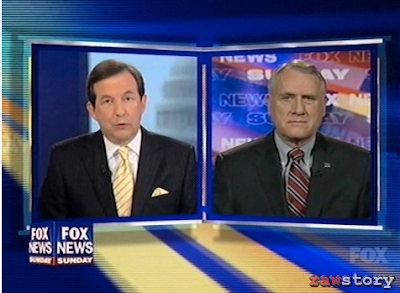
There is not yet a vacancy on the Supreme Court but the second-ranking Republican in the Senate is already planning a strategy of opposing President Barack Obama's potential nominee.

Jon Kyl (R-Az) told Fox News' Chris Wallace that Republicans are prepared to fight a nominee who might stick up for the little guy, a position he called "overly ideological."
Kyl had decried the use of the filibuster when Republicans were in the majority. "It's never been the case until the last two years that a minority could dictate to the majority what they could do," Kyl said in 2005.

Since Democrats were the first party in decades to use the filibuster to block a judicial nominee, Republicans are within their rights to continue to use it, according to Kyl. Democrats blocked George W. Bush's nominee, Miguel Estrada in 2001.

Click here for the rest of the story. A